

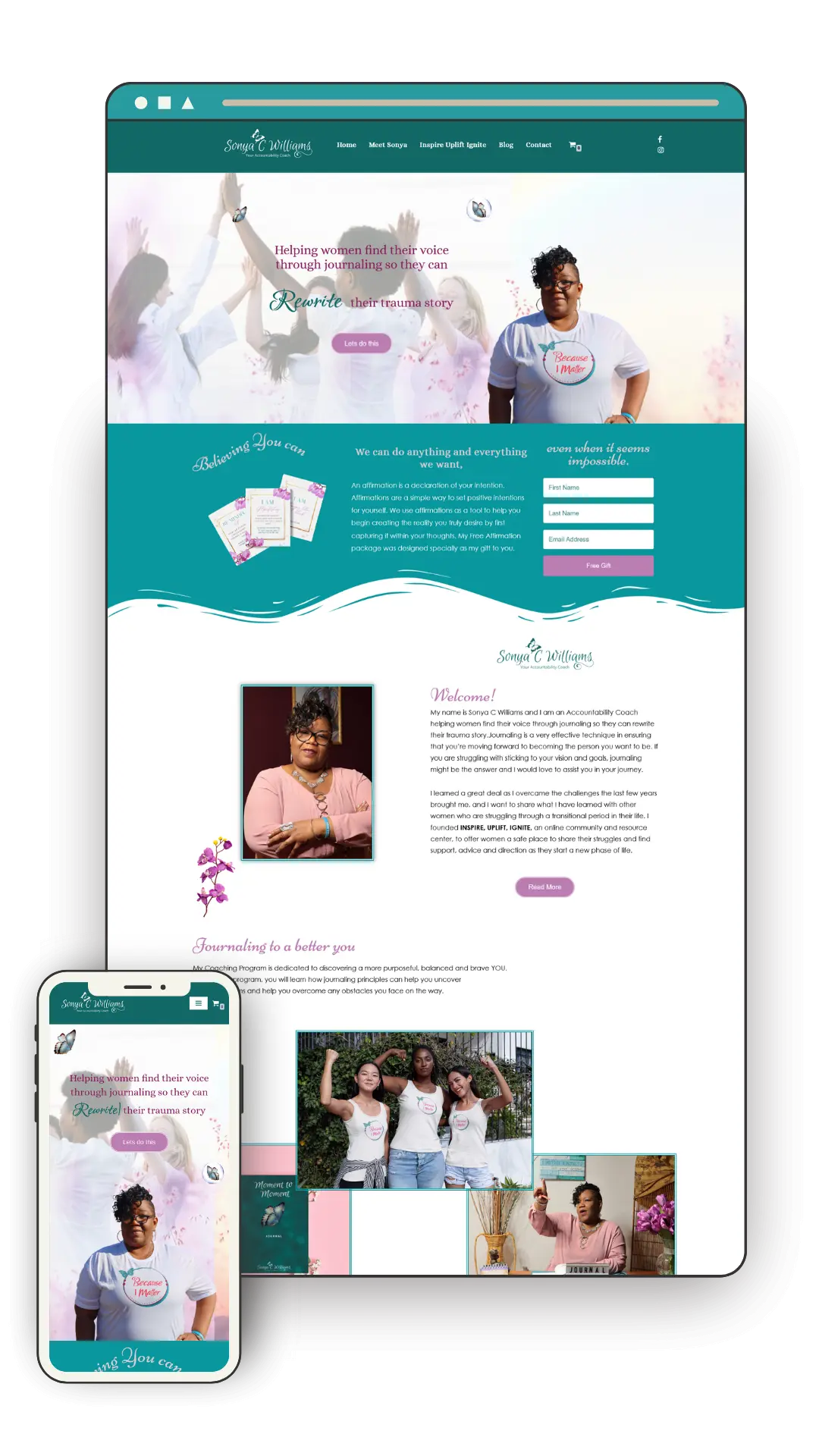


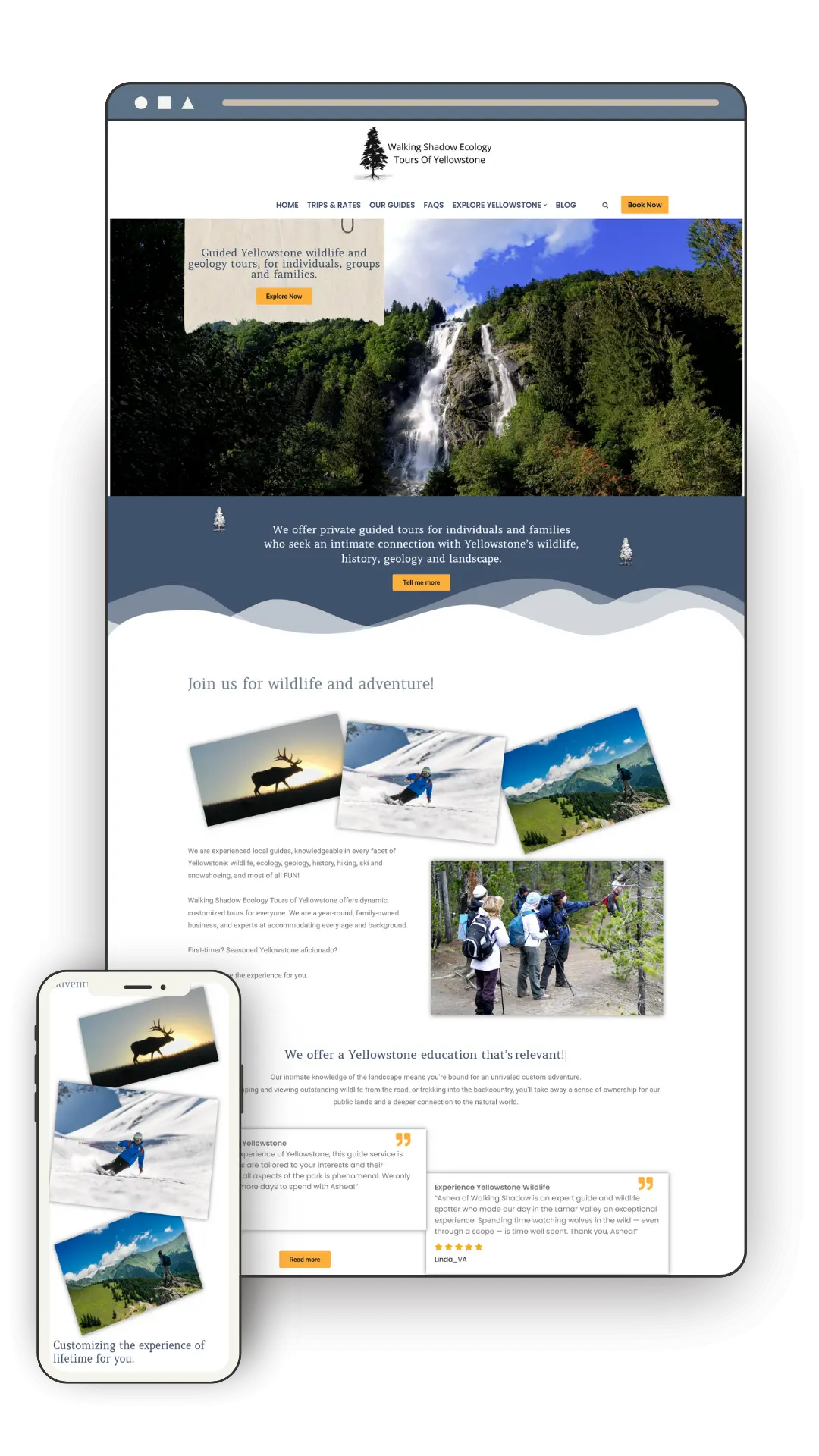


Do Coaches Need a Website? 7 Reasons Your Coaching Business Deserves One

Do Coaches Need a Website If They Already Have Social Media?
Let’s talk about something I hear so many business owners wonder about.
Do I really need a website for my coaching business?
After all, you already have Instagram, Facebook, LinkedIn, perhaps a Facebook group, and maybe even a YouTube channel. People can discover you, follow your content, send you messages, and learn about your services.
So why add another thing to your to-do list??
If you’re a new coach, you might be wondering whether investing in a website makes sense when you’re still building your audience. Perhaps you’ve been putting it off because you don’t know where to start, what your website should include, or whether you should build it yourself.
I understand why you might have these questions. You want to spend your time helping people, developing your offers, connecting with potential clients, and growing a business you genuinely love. You don’t necessarily want to spend your evenings figuring out website layouts, domain names, booking forms, and technical settings!
Here’s my take as a web designer for coaches: You don’t necessarily need a website on day one, but having a well-planned website can become a valuable part of your coaching business as it grows.
Your website doesn’t have to be complicated, expensive, or filled with dozens of pages. It needs to serve a purpose, communicate what you do, and help the right people understand how to work with you.
Let’s look at what that actually means, when a website makes sense, what it should include, and how to decide whether to build one yourself or hire a professional web designer.
Why a Website Matters for Coaches in 2026
First, let’s look at the coaching industry itself.
According to the International Coaching Federation’s 2025 Global Coaching Study, the global coaching profession reached 122,974 coach practitioners, generating an estimated $5.34 billion in annual revenue.
The study also found that 59% of coaches expected their revenue to increase over the following year, with anticipated growth driven by more clients and coaching sessions rather than simply raising their fees.
What does this mean for your coaching business?
It tells us that coaching is a substantial professional industry, and coaches are looking for opportunities to grow their businesses.
Your website is one of the tools you can use to establish your online presence and explain what makes your coaching services right for the people you want to help.
There’s another useful piece of context. Clutch’s 2025 small-business website report, updated in April 2026, found that 83% of small businesses have a website, compared with 64% in 2018.
That statistic covers small businesses generally, not coaching businesses specifically. It doesn’t mean that every business needs a website or that a website guarantees more clients.
But it does show how common having a website has become among small businesses.
And if you’re building a coaching business, it is worth considering what having your own online home could make possible.
7 Reasons Your Coaching Business May Need a Website
1. Your potential clients can learn about you before contacting you
Think about the last time you considered purchasing a service from someone you didn’t know.
You probably wanted to understand who they were, what they offered, whether they had experience, and whether their approach felt right for you.
Your potential coaching clients may have similar questions.
Someone might discover you through a LinkedIn post, hear about you from a friend, watch one of your videos, or find your name in an online community.
They might be interested in working with you but not quite ready to send you a message.
Perhaps they’re shy. Perhaps they want to think about it first. Perhaps they have a few questions but don’t want to ask everything in a DM.
Your website gives them a place to explore your business at their own pace.
They can read about your approach, learn about your coaching packages, discover who you help, and understand what working with you might look like.
They can do this without feeling pressured to start a conversation before they’re ready.
Sometimes, that’s exactly the breathing room someone needs to decide whether they want to take the next step.
2. You can explain exactly what you do and who you help
Let’s say you’re a life coach who helps women navigate major life transitions.
You post regularly on Instagram, sharing helpful advice and encouraging messages. But when someone visits your profile, they might still wonder:
- What exactly do you help people with?
- Do you offer one-to-one coaching or group programmes?
- Who is your coaching best suited for?
- How does your coaching process work?
- How can I start working with you?
Social media gives you opportunities to answer these questions, but your information can become scattered across posts, videos, highlights, and comments.
A website brings your important information together.
Your homepage can introduce your coaching business. Your About page can explain your background and approach. Your services page can outline your offers, and your booking page can show people how to take the next step.
Instead of asking potential clients to piece everything together, you give them a clearer picture of what you do.
This is especially valuable if you’re a business coach, wellness coach, relationship coach, mindset coach, spiritual coach, or transformational coach with several services or programmes.
Your work deserves to be explained properly, not squeezed into a tiny social media bio.
3. Your coaching business can be discovered through Google
Here’s something worth considering.
What happens when someone searches Google for a service like yours?
They might search for a life coach who specialises in relationships, a business coach for women entrepreneurs, or a wellness coach who offers online sessions.
If you have a relevant, well-structured website, you have an opportunity to appear in search results for the services you offer and the questions your potential clients ask.
For example, your website might have pages targeting relevant searches such as:
- Life coach for women
- Business coach for female entrepreneurs
- Online wellness coaching services
- Relationship coaching for couples
- Mindset coaching for entrepreneurs
These are examples of keyword opportunities, not verified search-volume rankings. The best keywords for your business depend on your niche, audience, location, and actual keyword research.
You can also publish blog articles answering questions related to your coaching expertise.
For example, a relationship coach might write about communication challenges in relationships. A business coach might explain how to set realistic business goals. A wellness coach might discuss creating a sustainable self-care routine.
When these articles answer genuine questions and are properly optimised, they can help search engines understand what your website is about.
This is where SEO for coaches becomes useful.
SEO, or search engine optimisation, involves making your website easier for search engines to understand and helping the right people discover relevant pages.
It doesn’t guarantee rankings or clients, and it takes time. But it gives you another way to build visibility beyond posting on social media.
Your content can also help people who discover you through AI-powered search tools understand your expertise, provided your website is accessible and clearly explains what you do.
4. You can showcase your coaching packages without explaining everything in every conversation
Have you ever found yourself typing the same information to different people?
You explain what your coaching programme includes, how long it lasts, who it’s for, how the process works, and what someone should do if they want to join.
Then you do it again and again.
Of course, personal conversations are important. You want potential clients to feel heard, understood, and supported.
But you don’t have to make every conversation the first time someone learns the basics of your business.
Your website can provide that information in advance.
For example, a coaching services page could explain:
Who the program is for: The people who are most likely to benefit from your coaching.
What the program includes: The sessions, resources, support, or other features you genuinely provide.
How it works: Whether you offer individual sessions, group coaching, online program, or a combination.
What happens next: How someone can enquire, book a discovery call, or apply.
Frequently asked questions: Answers about the process, scheduling, format, and other common concerns.
This allows potential clients to understand your offer before contacting you.
It also helps you spend less time repeatedly explaining basic details and more time having meaningful conversations with people who are interested in your work.
5. Your website can make booking a discovery call easier
Let’s say someone reads your content and decides they’d like to explore working with you.
What happens next?
Do they have to send you a DM, wait for a response, ask for your booking link, and then figure out how to schedule a conversation?
Or can they visit your website, understand your process, and book a suitable time directly?
With the right booking integration, your coaching website can make the second option possible.
You could include a clear call to action such as:
- Book a Discovery Call
- Explore Coaching Packages
- Work With Me
- Apply for Coaching
You can connect your website to a booking tool, such as Calendly or another scheduling platform, depending on your needs.
You can also create a dedicated discovery-call page that explains what the call is for, who should book it, and what someone can expect.
The goal isn’t to pressure people into booking.
It’s to make the next step clear when they’re ready to take it.
If someone discovers your website while researching your services late at night, they can explore your offers and booking options even when you’re not online.
Your website doesn’t replace the human connection that makes coaching special. It simply makes it easier for people to find their way to you.
6. Your website can grow alongside your coaching business
Perhaps you’re currently offering one-to-one coaching.
But you have ideas for a group program, a digital workbook, a paid workshop, a membership, or an online course.
You don’t need to build everything immediately.
However, it helps to think about how your online presence might support your future plans.
Depending on your chosen platform and setup, your website could eventually include:
- Individual coaching packages
- Group coaching program
- Sales pages for signature offers
- Digital products and downloadable resources
- Online courses and memberships
- Email newsletter sign-ups
- Automated email sequences
- Payment and booking integrations
- Blog content and educational resources
For example, a life coach might begin with a homepage, About page, coaching services page, and booking page.
Later, when she’s ready to launch a group program, she could add a dedicated sales page. If she creates a digital workbook, she could add an online shop or product page.
The website can develop as her business evolves.
You don’t have to build your entire future business today. You just need to make thoughtful decisions about the foundation you’re creating now.
This is one reason I encourage coaches to think about more than how their website looks.
A beautiful design matters, but so does considering what you want your website to help you do.
7. You can create an online home that feels like your brand
Your coaching business is more than a list of services.
It’s your approach, your values, your experience, and the way you support the people you work with.
Your website gives you room to communicate those things in a way that reflects your personality and business.
Your branding, colours, typography, photography, messaging, and page layouts can work together to create a consistent experience.
For example, a spiritual coach may want a calm, welcoming visual identity. A business coach may prefer a confident, polished look. A wellness coach may want a fresh and reassuring design.
There isn’t one perfect style for every coach.
What matters is that your website feels aligned with the experience you want people to have when they encounter your business.
This is where strategic branding and website design work beautifully together.
Your branding helps communicate your identity. Your website brings that identity into a practical online experience where people can learn about your services and explore how to work with you.
If you’re ready to create a cohesive brand, you can explore my branding and logo design services.
Can You Get Coaching Clients Without a Website?
Yes, you can.
Let’s make that clear because I don’t believe you need to rush into investing in something before you’re ready.
Coaches can find clients through referrals, networking, social media, professional relationships, workshops, speaking engagements, and other channels.
You might already have a thriving coaching practice without a website.
You might be just starting out and still figuring out your niche, services, or ideal clients.
You might be testing a new offer before deciding whether you want to build a full online presence.
All of that is perfectly reasonable.
A website is a tool, not a guarantee of business success.
It doesn’t automatically bring enquiries, and it won’t fix unclear messaging, an offer that doesn’t fit your audience, or a lack of visibility.
Your website needs to be supported by a clear offer, relevant content, a way for people to discover you, and an understandable next step.
So if you’re getting clients through referrals and your current approach works for you, you don’t have to panic about not having a website.
But if people regularly ask you for information about your services, you’re ready to build your online visibility, or you want a more organised way to explain your offers, a website may be a worthwhile next step.
The question isn’t whether every coach must have a website.
It’s whether having one would help your particular business work more smoothly.
What Should a Coaching Website Include?
You don’t need a website with 20 pages to look professional.
In fact, a small, well-planned coaching website can be much more useful than a large website that leaves visitors wondering where to go.
Here are the pages and features I’d consider first.
1. A homepage that explains what you do
Your homepage should quickly communicate who you help, what you help them with, and how they can learn more.
Instead of a vague headline such as “Welcome to My World,” consider a clear introduction to your coaching services.
For example:
Helping women navigate life transitions with greater clarity, confidence, and self-trust.
This is an illustrative example. Your own message should reflect your actual coaching approach and the people you serve.
Your homepage can also introduce your services, share relevant testimonials if you have permission to use them, answer common questions, and guide visitors towards the next step.
2. An About page that helps people understand you
Your About page doesn’t need to be your entire life story.
It should help potential clients understand your background, your approach to coaching, and why your work matters to you.
You might explain what led you to this work, your relevant training or qualifications, your values, and how you support clients.
The aim is to help people understand the person behind the business while keeping the focus on how you work with them.
3. A services page that explains your coaching offers
If you offer one-to-one coaching, group coaching, or several programs, make it easy for visitors to understand their options.
For each offer, explain who it’s for, what it includes, how the process works, and how to enquire or book.
If you have a signature program that deserves more space, a dedicated sales page may be more appropriate than trying to explain everything on one services page.
4. A clear booking or contact page
Tell visitors how to take the next step.
Depending on your business, this could be booking a discovery call, completing an enquiry form, applying for a program, or contacting you directly.
Keep the process simple and make sure your forms and booking links work properly on mobile devices.
5. Testimonials or client feedback
If you have permission to share client testimonials, they can help visitors understand what working with you has been like for others.
Use genuine feedback and keep it in context.
Never invent testimonials, exaggerate results, or promise that prospective clients will achieve the same outcomes.
If you’re a new coach without testimonials yet, that’s okay. You can focus on explaining your approach, qualifications, experience, and the structure of your services.
6. An FAQ section
Think about the questions people frequently ask before working with you.
For example:
- Do you offer online coaching?
- How do your coaching sessions work?
- How long does a typical program last?
- Who is your coaching suitable for?
- How can I book a discovery call?
- What happens after I enquire?
Answering these questions on your website can help people decide whether your services are right for them.
7. Essential technical and SEO foundations
A coaching website also needs a few things visitors may never consciously notice but that help the site function properly.
These include:
- Mobile-friendly design
- Secure HTTPS connection
- A domain name that represents your business
- Clear navigation and working links
- Appropriate page titles and meta descriptions
- Descriptive headings and readable content
- A sitemap and appropriate indexing settings
- Contact forms that work correctly
- Relevant privacy information and policies
- Reasonable loading performance
- Analytics to help you understand website activity
You don’t have to become a technical expert to have these things in place.
If you hire a website designer, ask which technical and SEO essentials are included in the package and which require additional work.
You can explore my website design packages for coaches and service providers to learn more about my approach.
Should You Build Your Own Coaching Website or Hire a Web Designer?
This is one of the biggest decisions you’ll make when planning your coaching website.
And the answer depends on your budget, time, technical confidence, and what you need your website to do.
Let’s look at the options.
Option 1: Build your own coaching website
DIY website design can be a sensible choice if you’re starting your coaching business, have a limited budget, and enjoy learning new tools.
Platforms such as WordPress, Wix, Squarespace, and Showit offer different ways to create a website without necessarily writing code.
Depending on the platform, you may need to pay for a domain, hosting, a subscription, a theme or template, and any additional tools you choose.
The main advantage: You can get started without paying a professional designer to handle the entire project.
The trade-off: You’ll be responsible for the decisions and work involved in creating the website.
That may include choosing a platform, planning your pages, writing your copy, selecting your design, configuring forms, connecting your domain, checking mobile layouts, and troubleshooting technical issues.
If you enjoy that process, wonderful!
But if you’ve spent weeks choosing fonts and adjusting layouts without actually launching your website, it may be worth reconsidering how you want to spend your time.
Remember, the goal is not to create the most elaborate website.
The goal is to create a useful website that helps people understand your business.
Option 2: Start with a website template
A website template gives you a pre-designed foundation to work with.
You can customise the colours, fonts, images, text, and layouts to suit your coaching brand.
Templates can help you get started faster than designing every page from scratch, but they still require work.
You’ll need to adapt the template to your services, make sure your messaging is clear, check the mobile experience, and configure any necessary integrations.
A template may be a good middle ground if you want more design guidance but still prefer to build the website yourself.
Just remember that buying a template doesn’t necessarily mean buying a finished, ready-to-launch website.
Option 3: Hire a professional web designer for coaches
If you want someone to handle the website design and technical setup, hiring a professional may be worth considering.
A specialist web designer for coaches can help you plan your pages, organise your content, create a consistent visual experience, and make the website easier for potential clients to navigate.
Depending on the package, professional website design may also include branding, copywriting, SEO setup, booking integrations, sales pages, or other features.
Not every designer includes all these services, so check the scope carefully before booking.
When comparing quotes, ask:
- How many pages are included?
- Is the website designed around my business and audience?
- Who writes the website copy?
- Is branding included?
- Is basic SEO setup included?
- Are booking forms and email integrations included?
- Who provides the domain, hosting, and paid software?
- Will the website be mobile-friendly?
- Will I be able to update my website myself?
- What support is available after launch?
Two website design packages may have very different prices because they include very different amounts of work.
Rather than comparing prices alone, compare what you’re actually receiving.
And please remember that hiring a designer doesn’t guarantee enquiries or revenue. A well-planned website can support your marketing, but your results also depend on your offer, audience, messaging, visibility, and many other factors.
So, which option should you choose?
Here’s a simple way to decide.
| Your current situation | An option to consider |
|---|---|
| You’re new to coaching and testing your offer. | Start with a simple DIY website or template. |
| You have a clear offer but a limited budget. | Consider a template and customise it carefully. |
| You have clients but no website. | Start with a focused website that explains your services and how to work with you. |
| Your website is outdated or difficult to navigate. | Consider a redesign or professional website review. |
| You’re juggling coaching, marketing, and business operations. | Consider hiring a designer to handle the website project. |
| You need a website, sales pages, email integrations, and a course or membership setup. | Look for a designer who can support the wider technical requirements. |
You don’t need to choose the most expensive option to have a useful website.
Choose the option that makes sense for your business today, your budget, and the time you can realistically dedicate to the project.
How Much Does a Coaching Website Cost?
Let’s talk about the investment, because it’s often the question behind the question.
When coaches ask whether they need a website, they’re sometimes really asking:
Is this something I can afford right now?
There isn’t one universal price for a coaching website. The cost depends on how you build it, the platform you choose, the number of pages, the design requirements, and the services included.
Here are the main expenses to consider.
DIY website costs
With a DIY website, you may need to pay for:
- Your domain name
- Website hosting or a website-builder subscription
- A theme or template, if you choose a paid option
- Premium plugins or integrations, if required
- Email marketing or booking tools, if they aren’t included in your existing plans
Some platforms offer free entry-level options, while others require paid subscriptions. WordPress itself is free, but a self-hosted WordPress website still involves hosting and a domain, and optional themes, plugins, or professional support may add to the cost.
Your total cost depends on your setup, so check the current prices of the tools you plan to use.
Website template costs
With a template, you pay for the design foundation as well as any ongoing platform, hosting, or software expenses.
You may still need to customise the design, write your website copy, add your images, configure your forms, and make sure everything works.
If you hire someone to customise the template for you, that becomes an additional design expense.
Professional website design costs
Professional website design fees vary considerably.
A straightforward website with a few pages may cost much less than a project that includes brand strategy, copywriting, custom functionality, multiple sales pages, course integration, or email automation.
When evaluating professional website design prices, look at the entire scope of work rather than the number of pages alone.
For example, a five-page website that includes strategic planning, branding, copywriting, booking integration, and SEO setup is not necessarily equivalent to a five-page website where you supply everything and the designer only handles the layout.
Ask for a written breakdown of what is included.
Don’t forget the ongoing costs
Your initial website investment isn’t always the only expense.
Depending on your setup, you may have ongoing costs for:
- Domain renewal
- Website hosting
- Premium plugins or themes
- Website-builder subscriptions
- Booking or email marketing tools
- Maintenance and technical support
Some of these costs are optional, and others depend on your chosen platform.
Before you commit, calculate both the initial investment and the recurring expenses.
That way, you can make a decision that works for your business rather than choosing a website you struggle to maintain.
My advice: Don’t spend money on features you don’t need yet. Start with what will genuinely help your coaching business, and expand as your requirements grow.
If you’d like to discuss your website requirements, you can explore my website design packages.
When Is the Right Time to Get a Website for Your Coaching Business?
You don’t have to wait until you’ve reached a particular revenue milestone.
You also don’t have to rush into building a complicated website before you know what you want your coaching business to become.
Instead, consider whether you’re reaching a point where having a website would make your work easier or support your next stage of growth.
For example, you might be ready when:
You’re regularly explaining your services to potential clients. A website can give people one place to understand your offers and process.
You’ve developed a clear coaching offer. You know who you help, what you offer, and how people can work with you.
You want to build your visibility through Google. A website gives you a place to publish useful content and create pages around the services you provide.
You’re launching a new program. A dedicated sales page can explain the offer, outline the details, and guide interested people towards the next step.
You’re ready to move beyond relying on one platform. A website gives you an online presence that you manage, rather than relying entirely on social media profiles.
You’re spending too much time handling repetitive enquiries. Your website can answer common questions and explain your booking process.
Your website doesn’t need to do everything from the beginning.
You can launch a simple, useful version and improve it as your business grows.
Do You Need a Website If You’re a New Coach?
If you’re a new coach, I wouldn’t tell you to spend money you don’t have just because everyone else seems to have a beautiful website.
You can start by clarifying your niche, developing your offer, connecting with potential clients, and understanding the problems you want to help them solve.
You might begin with a simple one-page website that introduces you, explains your services, and tells people how to contact you.
You can add more pages when you have a clearer idea of what your business needs.
For example, you might start with:
- A short introduction to your coaching business
- Information about your services
- A little about your approach and experience
- A way to enquire or book a call
That’s enough to create a starting point for your online presence.
As you gain experience and develop your offers, you can add testimonials, FAQs, a blog, additional services, or sales pages.
You don’t need to have everything figured out before you begin.
Your first website doesn’t have to represent the final version of your dream business. It can be the beginning of bringing that vision to life💗
Frequently Asked Questions About Coaching Websites
Do coaches need a website?
A website isn’t mandatory for every life coach. You can find clients through referrals, networking, and social media. However, a website can help coaches explain their services, share their approach, answer common questions, and make it easier for potential clients to enquire or book a session.
Do business coaches need a website if they already use LinkedIn?
LinkedIn can be a valuable platform for business coaches, but a website offers a different kind of experience. You can organise your coaching services, explain your programmes, publish articles, and create dedicated pages for your offers. You can also direct people from LinkedIn to relevant pages on your website.
Can I get coaching clients without a website?
Yes. Coaches can find clients through referrals, networking, social media, speaking engagements, and other channels. A website is one way to support your visibility and communicate your services, but it doesn’t guarantee clients.
What is the best website platform for coaches?
The best platform depends on your needs, budget, technical confidence, and future plans. WordPress offers flexibility and extensive customisation, while platforms such as Squarespace, Wix, and Showit provide different website-building experiences. If you need courses, memberships, online payments, or advanced integrations, compare the available features before choosing.
How many pages does a coaching website need?
A simple coaching website can begin with a homepage, About page, services page, and contact or booking page. You may need additional pages if you have several programmes, a blog, digital products, or a membership. The right number of pages depends on what visitors need to understand and do.
Will a website automatically bring me coaching clients?
No. A website doesn’t automatically generate enquiries or sales. It needs clear messaging, useful content, a relevant offer, and ways for potential clients to discover it. SEO, networking, referrals, and social media can all help people find your website, but results vary.
Should I hire a web designer or build my coaching website myself?
DIY may be a good choice if you have the time, skills, and interest to build your own website. Hiring a professional may make sense if you need strategic guidance, want someone to handle the technical work, or would prefer to focus your time on coaching and running your business. Compare the scope, cost, and support included in each option before deciding.
Is a website worth the investment for a coaching business?
It can be, especially if you need a central place to explain your services, support your marketing, publish content, or manage enquiries. Whether it’s worth the investment depends on your business goals, budget, and how you plan to use the website. Start with a clear purpose rather than investing in features you don’t need.
Do I need a blog on my coaching website?
A blog can help you answer questions your potential clients are searching for, demonstrate your expertise, and create additional opportunities to be discovered through search engines. However, blogging takes time. If you decide to publish articles, focus on questions relevant to your services and create genuinely useful content rather than publishing simply to meet a daily target.
Your Coaching Business Deserves an Online Home
If you’ve been wondering whether you need a website for your coaching business, I hope this has helped you see the possibilities more clearly.
You don’t need the biggest website, the fanciest features, or dozens of pages.
You need an online presence that makes sense for your business, communicates your services clearly, and gives potential clients a comfortable way to explore how you can help them.
As your business grows, your website can grow with it.
Maybe today you need a simple website to introduce your coaching services. Perhaps next year you’ll want a sales page for your signature program, a membership area, or an email system that helps you stay connected with your audience.
You can build towards those things one step at a time.
This is the work I love doing as a web designer and brand strategist for coaches. I love helping coaches turn the ideas they’ve been carrying in their hearts into a thoughtful online presence that reflects their vision and supports the business they’re building.
Your website should feel like an extension of your work, not another overwhelming task on your list.
Ready to create a website for your coaching business?
If you’re ready to explore your options, here are a few ways I can help.
Explore my website design packages to discover website solutions for your business.
Explore branding and logo design if you’d like a visual identity that feels aligned with your coaching brand.
Explore funnel design and setup if you need sales pages and a more organised path from discovering your business to exploring your offers.
Or, if you’d like support with the bigger picture, you can explore my You Can Have It All business support package and if you’re still figuring things out, that’s okay, too. Start with what you need today and give yourself room to grow.
Your vision matters. Let’s give it an online home that feels like you💗

